
One system running a group of websites. Every brand keeps its own identity, nobody rebuilds from scratch, and a new site goes live in days rather than months.
Running several websites separately means paying for the same work several times. The same security update, the same accessibility fix, the same new feature, once per site, forever. And when one of them falls behind, it’s the one a customer happens to land on.
A multi-site platform is one system underneath a group of websites. Shared machinery, separate personalities.
What that gets you
- Fix it once. A security patch, a speed improvement or a new component lands everywhere at the same time.
- New sites in days. A new location, brand or campus launches from the existing platform rather than from nothing.
- Consistent where it matters, different where it counts. Shared components and standards, but each site keeps its own brand, tone and content.
- Separate teams, separate control. Each site’s own people edit their own site without being able to break anybody else’s.
- One bill, one team, one set of standards, instead of four agencies and a spreadsheet of renewal dates.
Who this is for
Hotel and hospitality groups. College and education groups. Franchises. Businesses with a site per location, per brand or per market. Anybody running more than about three websites that share anything at all.
It also works internationally. The sites don’t have to be in the same country to sit on the same platform.
What it looks like when it works
Barnsley Premier Leisure run ten leisure clubs, the Barnsley Metrodome, a golf business and more, and all of it used to sit on separate websites with separate providers. It’s one platform now, taking more than 1.5 million visits a year, with a custom streaming service built on top of it.
Crest Hotels Group run nine hotels with nine different brands on one shared system. Every property looks sharp and like itself, every property pushes guests to book direct, and a brand new hotel can be online without starting from a blank page.
RNN Group is five sites across four colleges and the group itself. The colleges now pull more than 365,000 visitors a year between them, all growing, with social and paid traffic up several hundred per cent.
What it costs
From £12,000, and this is the one area where the sums get better the more you need. Five separate websites cost roughly five times one website. A platform with five sites on it does not, and every site you add afterwards is cheaper than the one before.
Fixed price before anything starts. Our pricing is on the website.
We've built this before
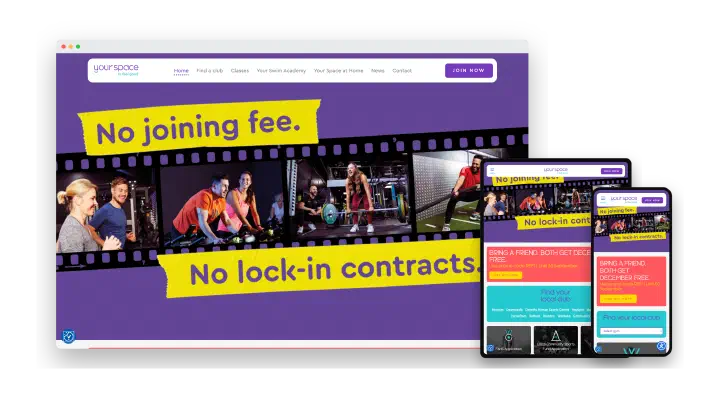
Barnsley Premier Leisure (Your Space)
Ten leisure clubs, a waterpark, a golf business and a home streaming platform, spread across four different web providers and drifting …
Read the case study →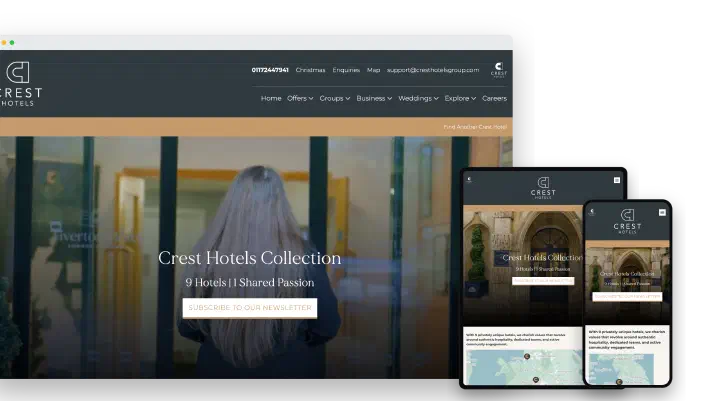
Crest Hotels Group
We built one website platform that runs an entire hotel group — nine hotels, nine brands, one shared system. Every property looks sharp, …
Read the case study →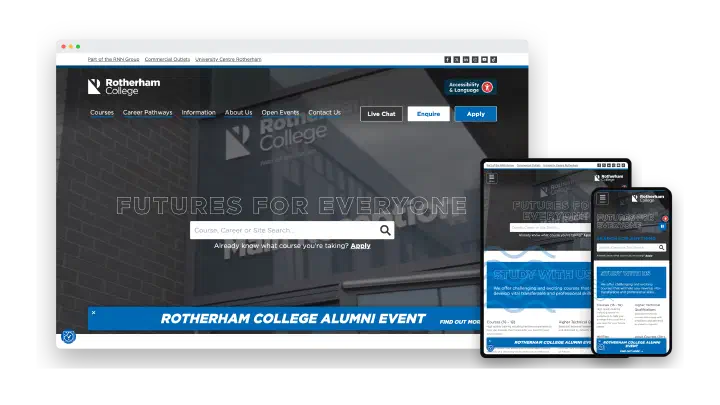
RNN Group
We rebuilt RNN Group's family of websites — five sites across four colleges and the group. The colleges now pull 365,000+ visitors a year, …
Read the case study →